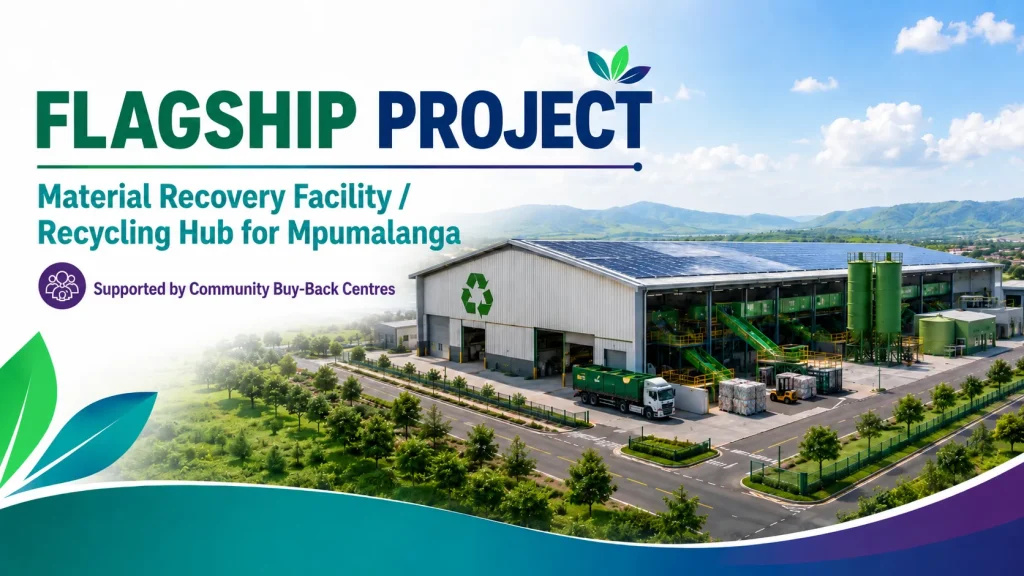
Mpumalanga has a growing opportunity to strengthen its environmental sustainability efforts through the establishment of a flexible, scalable Material Recovery Facility or Recycling Hub. This proposed project is designed to support cleaner communities, reduce waste pressure on landfill sites, stimulate local economic development, and create a structured circular economy model that benefits both people and the environment.
The Flagship Project is built around a practical and adaptable recycling system that can respond to the waste management needs of different municipalities, communities, businesses, informal recyclers, and emerging green entrepreneurs across the province. At its core, the project aims to transform waste from an environmental burden into a valuable resource that can support job creation, enterprise development, environmental education, and long-term sustainability.
Project Overview
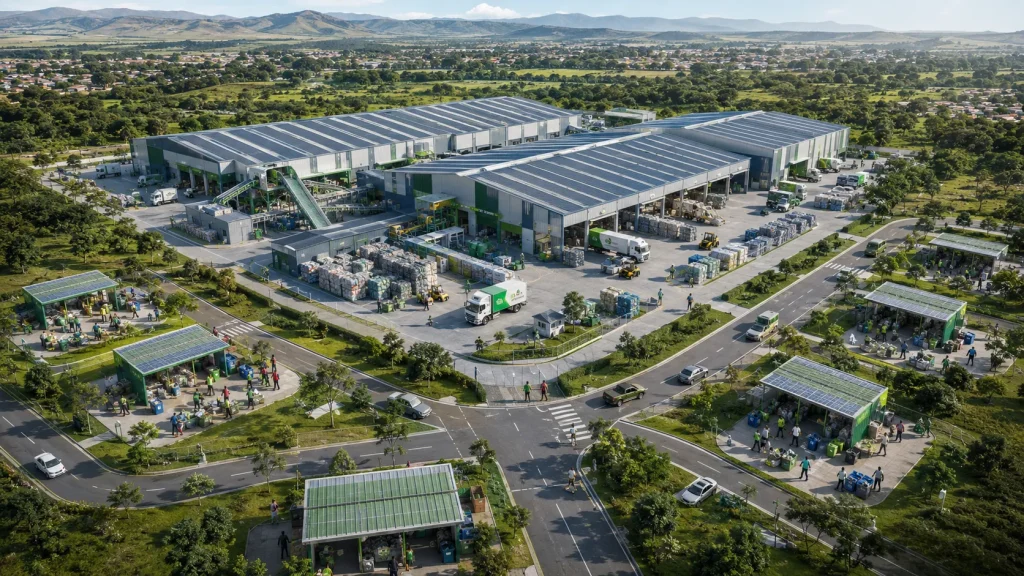
The proposed Material Recovery Facility or Recycling Hub will serve as a central point where recyclable materials can be collected, sorted, processed, packaged, and redirected back into productive use. These materials may include paper, cardboard, plastics, metals, glass, organic waste streams, e-waste, and other recoverable materials, depending on the final project scope and operational capacity.
To make the project more accessible and community-driven, the facility will be supported by Community Buy-Back Centres. These centres will act as local collection points where individuals, waste pickers, small businesses, schools, households, and community groups can bring recyclable materials in exchange for value. This creates a direct incentive for communities to participate in recycling while helping to formalise and strengthen the waste recovery chain.
Project Overview
Mpumalanga has identified a clear need for an organised, province-focused recycling infrastructure that can respond to both environmental and socio-economic challenges. Waste continues to place pressure on landfill capacity, public spaces, natural ecosystems, and municipal service delivery systems. At the same time, recyclable materials that could be reused or repurposed are often discarded without proper recovery.
This project presents an opportunity to address these challenges in a structured and inclusive way. By investing in a Material Recovery Facility or Recycling Hub, the province can reduce litter, divert waste from landfills, support cleaner towns and communities, and create a platform for green economic participation.
Key Value Proposition
The Flagship Project offers a multi-layered value proposition for Mpumalanga. It is not only a waste management intervention, but also a development initiative that brings together environmental protection, enterprise development, job creation, skills development, and community participation.
The project will help to:
Reduce litter and landfill demand
By improving the recovery and processing of recyclable materials, the project will help reduce the volume of waste sent to landfill sites and support cleaner public spaces.
Spark local economic development
The recycling value chain creates opportunities for manufacturing, resale, processing, logistics, collection services, and the incubation of green start-ups.
Manage multiple waste categories more effectively
A properly structured facility can support the organised handling of various waste streams, including general recyclables and specialised waste categories that require responsible management.
Create jobs at all levels
Employment opportunities can be created across collection, sorting, transport, administration, operations, training, maintenance, enterprise development, and community engagement.
Maintain healthy biodiversity systems
Reducing waste pollution helps protect rivers, wetlands, open spaces, agricultural land, and biodiversity systems that are essential for environmental resilience.
Community Buy-Back Centres
Community Buy-Back Centres will form an important part of the project’s success. These centres will bring the recycling economy closer to the people by creating local access points for waste recovery and income generation.
Through these centres, communities will be encouraged to separate recyclable materials at source and participate directly in environmental protection. This approach helps to build awareness, improve recycling behaviour, and strengthen community ownership of sustainability initiatives.
The centres may also support youth groups, cooperatives, schools, small enterprises, informal recyclers, and local environmental champions who are already active in waste collection and recycling activities.
Economic and Social Impact
The Flagship Project has strong potential to support inclusive economic growth. Recycling is labour-intensive and creates opportunities across multiple levels of the value chain. From collection and sorting to processing and manufacturing, the project can open doors for new businesses, community cooperatives, youth employment programmes, and supplier development initiatives.
The facility can also become a platform for skills transfer and environmental education. Training can be offered in waste separation, health and safety, recycling operations, business development, logistics, and green enterprise management.
By linking environmental responsibility with income-generating opportunities, the project supports both sustainability and social upliftment.
Environmental Impact
The environmental benefits of the project are significant. A well-managed recycling hub can help reduce illegal dumping, prevent recyclable materials from entering landfills, lower pollution levels, and protect natural ecosystems from waste-related harm.
The project also supports climate resilience by promoting resource efficiency and reducing the need for raw material extraction. Recycling materials back into the economy helps conserve resources, lower emissions associated with production, and contribute to a cleaner, greener Mpumalanga.
Alignment with Sustainable Development Goals
The Flagship Project supports the broader sustainability agenda by contributing to responsible consumption and production, decent work and economic growth, sustainable cities and communities, climate action, and environmental protection.
It also aligns with the province’s commitment to building a greener, more inclusive and resilient future. By combining infrastructure, community participation, and enterprise development, the project provides a practical model for sustainable development in action.
Long-Term Vision
The long-term vision is to establish a flexible and scalable recycling model that can grow across Mpumalanga. The project can begin with a central facility and selected community buy-back centres, then expand into additional municipalities and districts as demand, partnerships, and capacity increase.
Over time, the recycling hub can become a centre of excellence for waste recovery, green innovation, community participation, and circular economy development. It can also serve as a platform for partnerships between government, private sector, communities, schools, environmental organisations, and emerging entrepreneurs.
Conclusion
The Flagship Project represents a powerful opportunity to turn waste into value. Through a Material Recovery Facility or Recycling Hub supported by Community Buy-Back Centres, Mpumalanga can reduce landfill pressure, create jobs, support local enterprise, protect biodiversity, and build a stronger culture of environmental responsibility.
This project is more than a recycling initiative. It is a practical investment in cleaner communities, greener industries, stronger local economies, and a more sustainable future for Mpumalanga.